
Henry County Bench Warrants
Henry County bench warrants come from the courts in New Castle, Indiana. When a person skips a court date or breaks a judge's order, the court can issue a bench warrant for that person's arrest. Searching for active bench warrants in Henry County is possible through the state's online court records system or by contacting the local sheriff. The Henry County Sheriff's Office serves warrants across the county and can confirm if one is on file for a given name. You can start the search from home or make a call to get answers fast.
Henry County Quick Facts
Henry County Warrant Search
The best online tool for searching bench warrants in Henry County is the Indiana MyCase portal. It is free and covers all 92 Indiana counties. You can search by name or case number. When a judge in Henry County issues a bench warrant, it often shows up in the case details. Look for entries about failure to appear or a court order for arrest. The system does not always use the exact words "bench warrant," but the information is there if you read the case notes.
Calling the Henry County Sheriff's Office is the other direct method. The sheriff can tell you if a bench warrant is on file. Bring a valid ID if you visit in person at the courthouse in New Castle. The staff can check the system while you wait. Phone inquiries work too, and most are handled quickly during business hours.
How Bench Warrants Work Here
Bench warrants in Henry County are not the same as arrest warrants. An arrest warrant comes from an investigation into a crime. A bench warrant comes from the judge, usually because someone missed a court date. The judge signs the warrant right from the bench. Under Indiana Code IC 35-33-2-1, judges can issue warrants when a person fails to comply with a court order or when there is probable cause to believe an offense was committed.
Once a bench warrant is active in Henry County, it does not go away on its own. There is no expiration date. Law enforcement can pick you up at any time. Under IC 35-33-2-3, officers in Indiana can serve a warrant anywhere in the state. So a Henry County bench warrant can be served in Marion County, Allen County, or anywhere else. The warrant stays in state databases and will show up during background checks or traffic stops.
Most Henry County bench warrants come from missed hearings in criminal cases. But they also come up in civil matters. If a judge orders you to appear for a child support hearing and you skip it, a bench warrant can follow. The same goes for probation violations. Any time a judge gives an order and the person ignores it, a bench warrant is a real possibility in Henry County.
Henry County Sheriff and Warrants
The Henry County Sheriff's Office handles all warrant service in the county. This includes bench warrants from the circuit court and superior court in New Castle. Under Indiana law IC 36-2-13-5, the county sheriff has a duty to serve all court process, including warrants. If you think you have a bench warrant in Henry County, calling the sheriff is a smart first step.
Turning yourself in is the best way to handle a bench warrant. Call ahead and ask about the process. Find out if a bond has been set. Many judges set a bond amount when they sign the bench warrant. If bond is posted, you can often get released the same day with a new court date. Going in on your own terms beats getting stopped at a traffic light or pulled over on the highway. The Henry County Sheriff can walk you through what to expect.
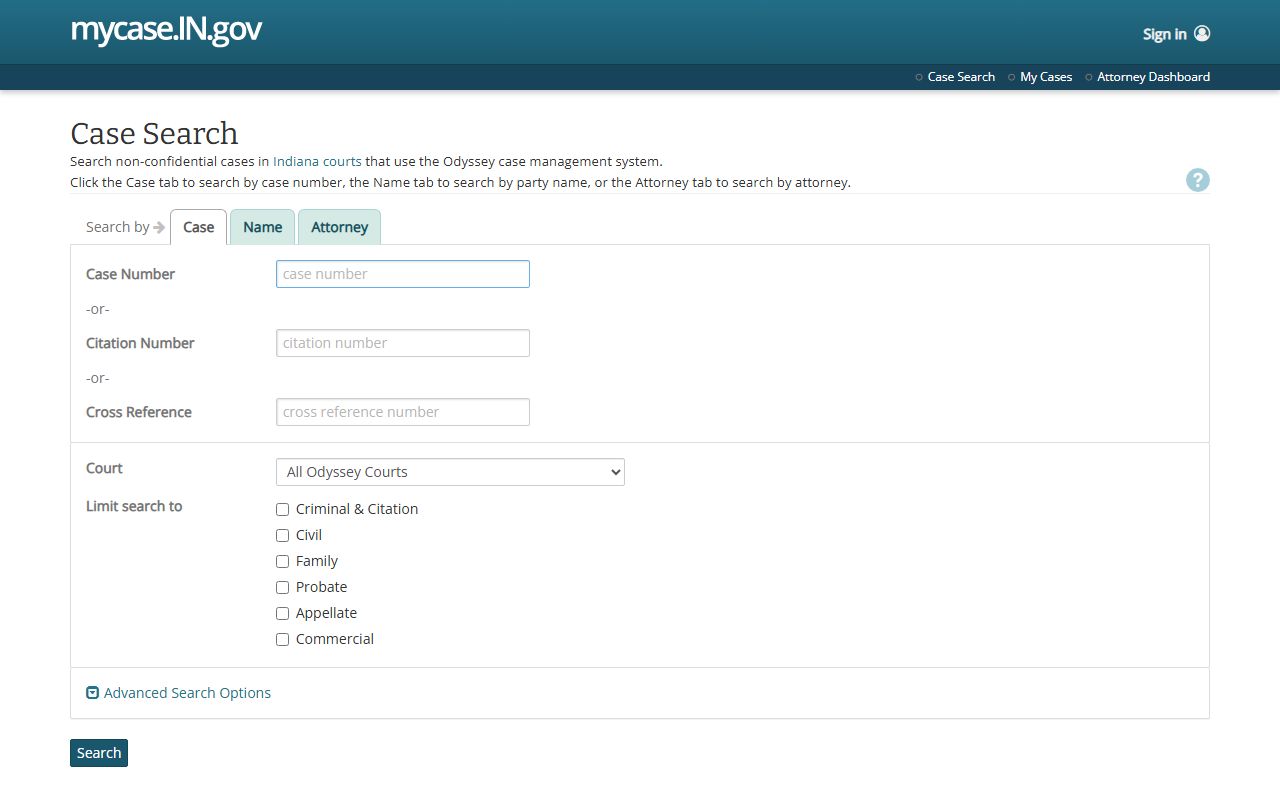
The MyCase portal shown above is the main state tool for looking up court records tied to bench warrants in Henry County and across Indiana.
Clearing a Bench Warrant in Henry County
You clear a bench warrant by going back before the judge. That is the only way. Paying a fine will not make it disappear. The judge who signed the warrant needs to see you in court. Most people get a lawyer to help. An attorney can file a motion to recall the warrant and get a new hearing date set. This sometimes avoids jail time while things get sorted out. The Henry County courts in New Castle handle all bench warrant matters.
Free legal help is available if you qualify. Indiana Legal Services gives free legal advice to people who meet income limits. They serve all of Indiana, including Henry County. The Indiana Public Defender Commission can also connect you with a public defender if you face criminal charges tied to the bench warrant. Here is what the process looks like:
- Confirm the bench warrant with the sheriff or clerk
- Get a lawyer or apply for a public defender
- Post bond if the judge set one
- Show up for your new court date
- The judge decides next steps for your case
Note: The longer you wait, the worse it can get. Bond amounts may go up, and extra charges can be added in Henry County.
Henry County Court System
Henry County is part of Indiana's 33rd Judicial Circuit. The Circuit Court in New Castle handles felony cases, civil cases, and family matters. The Superior Court takes on additional criminal and civil cases. Bench warrants can come from either court. Both share the same courthouse complex in New Castle.
Court records in Henry County are public under Indiana law. You can look up case files at the clerk's office or use the MyCase system online. No account is needed for MyCase. The state public records page has more detail on how to make formal requests if you need certified copies from Henry County.
State Resources for Henry County
Beyond the local sheriff, several state tools help with bench warrant searches in Henry County. The Indiana State Police runs a limited criminal history check that may show warrants on a person's record. The Indiana Sheriffs' Association has a directory listing every county sheriff office. It is useful for checking warrants in counties near Henry.
VINELink tracks custody status across Indiana. If someone with a Henry County bench warrant gets arrested, you can get alerts through this system. It is free and covers all Indiana counties.
Nearby Counties
These counties border Henry County. If the bench warrant was filed in a different county, you need to work with that county's court instead. Always check the warrant details first.