
Jackson County Bench Warrants
Jackson County bench warrants are issued by judges in Brownstown, Indiana. The county covers 514 square miles and has a population of about 42,000 people. When someone fails to show up for a court hearing or does not comply with a court order, a judge can issue a bench warrant for that person's arrest. The Jackson County Sheriff posts active warrants on their website, making this one of the easier counties to search. You can also use the state court system or call the sheriff to check if a bench warrant is on file.
Jackson County Quick Facts
Search Jackson County Warrants Online
Jackson County stands out because the sheriff's office actually posts warrant information on their website. The Jackson County Sheriff warrants page shows active warrants that you can view without calling or visiting anyone. This is not something all Indiana counties offer. The list gets updated as new warrants come in and old ones get cleared. Check back if you do not see a specific name, as the list changes over time.
For court case details, the Indiana MyCase portal covers Jackson County. This free tool lets you search by name or case number. Bench warrants typically appear in the case notes as failure to appear, body attachment, or order for arrest. MyCase gives you access to hearing dates, charges, and case outcomes. Between the sheriff's website and MyCase, you have two solid ways to find bench warrant information in Jackson County from your computer.
The sheriff's office also has a crime tip submission tool and a most wanted list on their site. These additional features can be helpful if you have information about someone with an outstanding warrant in Jackson County.
How Jackson County Bench Warrants Work
A bench warrant is a judge's order for arrest. It is not the same as a regular arrest warrant that police obtain during a criminal investigation. In Jackson County, bench warrants are signed by judges when a person fails to show up for court or breaks the terms of a court order. The judge issues the warrant right from the bench. Under Indiana Code IC 35-33-2-1, any judge with proper jurisdiction can issue an arrest warrant based on probable cause or noncompliance with a court order.
Once issued, a Jackson County bench warrant does not expire. It sits in the system until the person is caught or turns themselves in. Law enforcement can serve the warrant at any time, day or night. Under IC 35-33-2-3, officers can serve an Indiana warrant anywhere in the state. Leaving Jackson County does not make the warrant go away. It shows up on state and national databases. Background checks will flag it. Traffic stops in other counties can lead to arrest.
Jackson County Sheriff's Office
The Jackson County Sheriff's Office is at 150 East SR 250, Brownstown, IN 47220. You can call them at (812) 358-2141. Administrative hours are Monday through Friday, 8 AM to 4 PM. The sheriff handles all warrant service in Jackson County, including bench warrants from the circuit and superior courts.
If you think you have a bench warrant, calling the sheriff is a good first step. Staff can tell you if a warrant is on file and whether bond has been set. Turning yourself in is the smart move. When bond is set, you may be able to post it and get released the same day with a new court date. Going in on your own is far better than being arrested at home, at work, or on the road. Under Indiana law IC 36-2-13-5, the sheriff has a legal duty to serve all court process, so they will eventually find you.

The Jackson County Sheriff's website shown above is the main page for the department. It links to the warrants page, inmate roster, most wanted list, and contact information.
Resolving a Jackson County Bench Warrant
You resolve a bench warrant by going before the judge who issued it. There is no other way. Paying a fine does not clear the warrant. The judge must see you in court. A lawyer can help a lot with this process. Attorneys can file motions to recall the warrant and get a new court date. This approach can sometimes keep you out of jail while the case moves forward. The Jackson County courts in Brownstown handle all bench warrant cases.
Indiana Legal Services provides free legal help to people who meet income limits. They serve all of Indiana. The Indiana Public Defender Commission can connect you with a public defender if you face criminal charges. You do not have to deal with a bench warrant in Jackson County on your own. Help is available.
The Jackson County Sheriff's contact page has phone numbers and other ways to reach the office if you need to ask about turning yourself in or checking on a warrant.
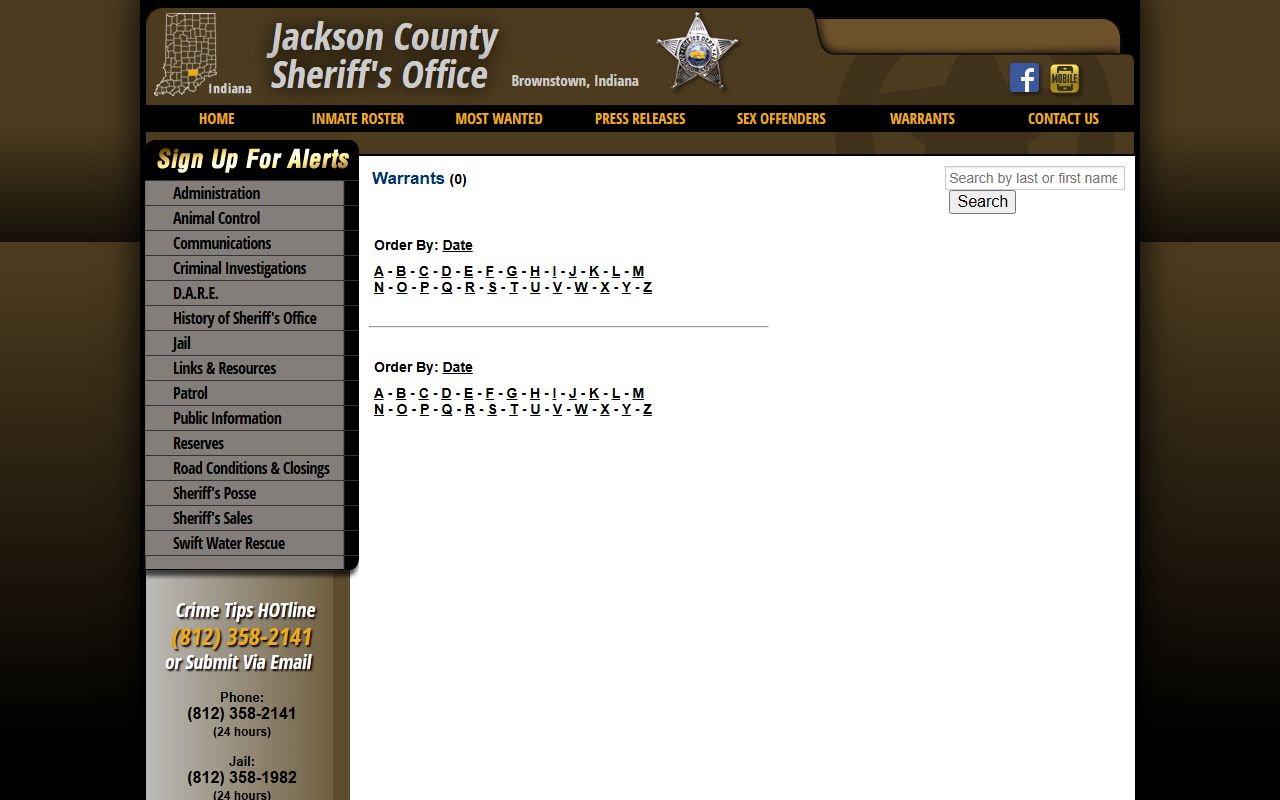
The warrants page above from the Jackson County Sheriff's website shows active warrants. Check this page directly for the most current information.
Note: Bench warrants in Jackson County will show up on background checks and can cause problems at traffic stops in any Indiana county.
Jackson County Court Records
All court records in Jackson County are public. That includes bench warrant details, case files, and hearing outcomes. The MyCase system is the easiest way to search online. It is free and does not require an account. The clerk's office at the courthouse in Brownstown also provides records in person. If you need certified copies, the state public records page has instructions on how to request them.
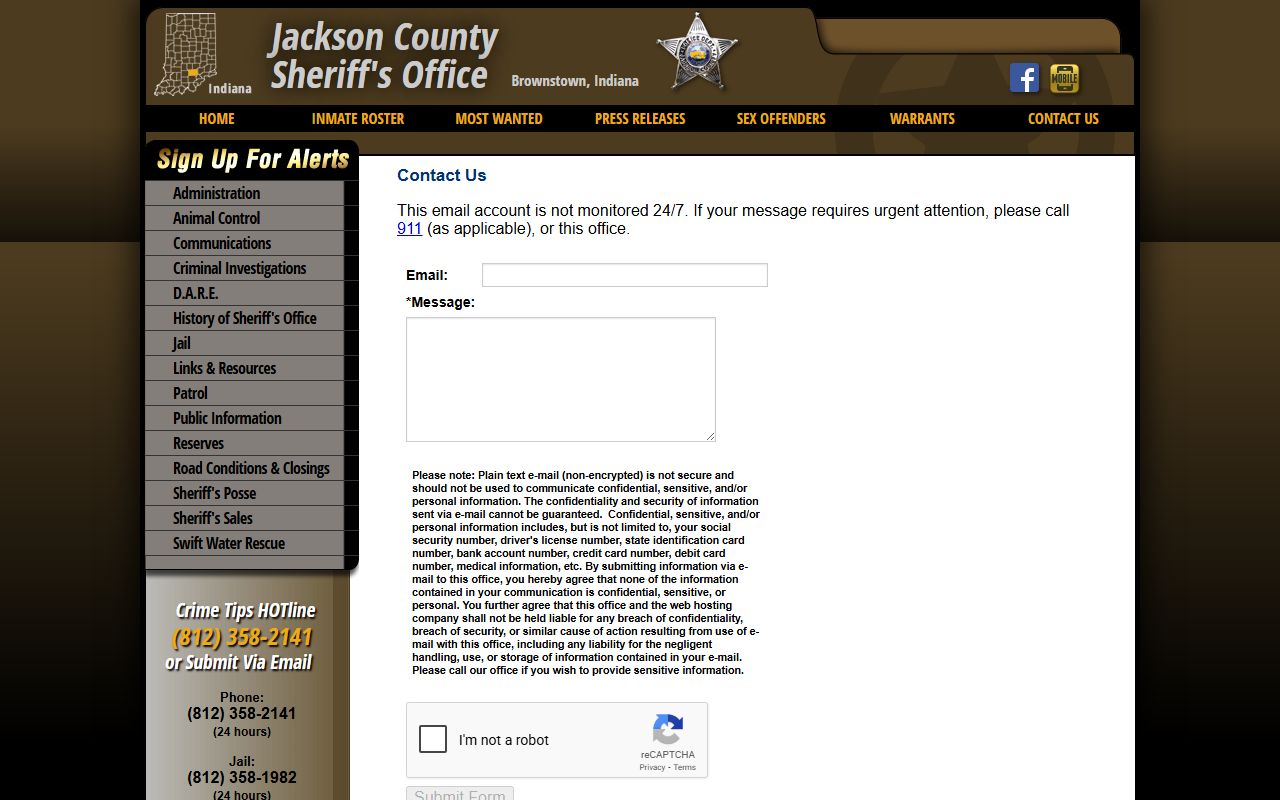
The contact page shown above provides direct phone numbers and office details for the Jackson County Sheriff, which is useful when you need to ask about bench warrants or turning yourself in.
State Resources for Jackson County
The Indiana State Police limited criminal history check can reveal warrants tied to a person's record. The Indiana Sheriffs' Association directory lists all 92 county sheriff offices and can help when you need to check warrants in counties near Jackson. VINELink is another free tool that tracks custody status across Indiana. If someone with a Jackson County bench warrant is arrested, VINELink can send you alerts.
Nearby Counties
These counties border Jackson County. A bench warrant from a different county must be dealt with through that county's court. Confirm which court issued the warrant before making calls.